Dr. Liu assigned us to read Wild Swans by Jung Chang. It is a history of China retold through the eyes of three daughters. Starting in Manchuria and continuing on through Communism.

This book actually surprised me. I did not know much about modern Chinese history before reading this book. I learned a lot about European history throughout high school, so it is interesting to compare the different regions of the world. It's very interesting how on the opposite side of the globe, there are so many striking similarities within the cultures. At the same time all over people were breaking away from their classical traditions, experiencing famines and wars, and being lead by one man with crazy ideologies.
Reading the personal accounts and tragedies of the people during the time of Mao was a bit chilling. It reminded me so much of what happened in Russia under Lenin and Stalin. It reminded me of what happened to my family during the purges and the political revolutions. It upset me to know that this sort of corruption occured more than once in history. I do not understand how such a man was allowed to come to power. I understand that after the kuomingtan there was a power void that was filled by the communist party lead by a powerful man. However, how the nation allowed for him to maintain his power after bearing all of the problems of famine and oppression, is beyond me. My question is, who let this man stay in power if his policies and his ideas were tearing the nation to peices instead of building it up. I mean his policies contradict his actions. He wanted communism, but insisted to be God in the eyes of the Chinese.
After reading Confucius Next Door and learning some elementary ideas about Confucius saying, I compared him to the ideologies of Mao.
A quote from Confucius:
Mao used fear. He terrorized the nation. Very Machiavelli. Very anti-Confucius. Confucius also spoke of citizens having the ability to question their government and their leader in order to make it stronger. Point out the flaws to fix them and make the nation better. However, Mao did not allow for such to happen and instead ignored those with intelligence (and eventually shunned all intellectuals). He focused on a power struggle within the political party as opposed to acting as a leader, creating more chaos and spreading a message of hatred across the nation.
A true leader can put aside his/her ego for the benefit of others. He/she will manage to work with others, accept ideas in order to make the nation stronger. Mao wanted to simply be God.
The author does have a point when she mentions that it was not Mao who was solely responsible for what happened during the 60s. It was also the people who backed him and listened to him. And that is what makes me sad. We have seen the same defense used repeatedly throughout history. Blind followers. It is funny what power can do to a person.
The book has made me think a lot about a number of topics regarding power, leadership and the Chinese culture. However, as much as I speak out against such dictators as Mao, I also understand that the book is a personal account. It is a family history. I would be interested to read accounts from other people who were not directly involved in politics. Such as an account of a country side worker. Although they were regarded as the Model Citizens, how were they treated?
I know in Russia, Stalin not only had a war within the party, but he also declared a war on the peasantry. He found scapegoats, the Kulaks, and sent them to do manual labor. I know my family on my mothers side was labeled as a Kulak. They were sent to Krygyztan for collective farming. Yet I know that a large number were not as lucky and were executed for one reason or another. It would be interesting to research this topic regarding China.
Just a minor side note:
Either Mao had a sense of humor or he was absolutely insane with his war on Grass. Maybe it was a symbolic war on Confucius himself.
What was he thinking?
Mao: "When the wind blows, the grass bends".... hmmm..... Confucius, you sly dog, you. I see your ancient ways of thinking and seek to abolish them. In fact, I have the perfect solution. I will declare war. I will destroy your beloved bourgeoisie grass. And the flowers too. Yes, yes, oh this is too perfect. Mwahahaha.
Does that make sense? I don't know. But I do think it's pretty funny, although in reality depressing.
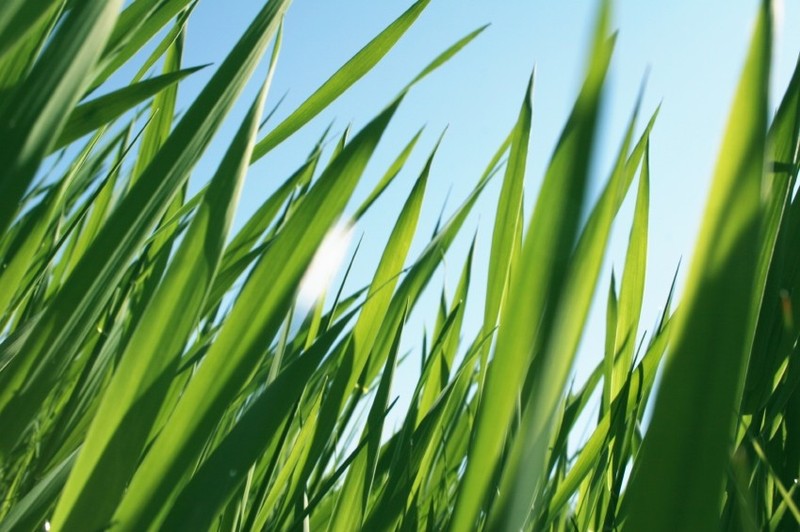
Certainly, times have changed and China is no longer in such an oppressive state as it was nearly 40 years ago (hopefully all of the bourgeoisie grass grew back). I am very excited to go on this trip and learn more about the culture. It will be interesting to see how it has changed from what I have read so much about.
The flight leaves on Saturday morning and I am very excited. I am bringing some necessities and some art supplies and some other goodies. I will take lots of pictures and keep this journal updated with my thoughts and experiences.


No comments:
Post a Comment